Sunday, 7 September 2014

Homemade Pastizzi

I was raiding my database of photos and stumbled upon a few that belonged to a recipe I didn't realise I hadn't shared.

Granddad used to make these and like the Piragi, ration them out amongst the family whenever we visited en masse. As the expanding family crammed into the sitting room, a small plate of goodies would be brought out, two always separated out for my fussy aunt, and once everyone had taken their fill of the quota, the four grandchildren would bargain for the remainder. It wasn't as though we weren't going to be fed an elephant's sufficiency (Dad's phrase) when we moved into the kitchen, it was just that these were one of the absolute goodies Granddad offered.

Now, you can buy them in the supermarket.  More than a few varieties, and while they're deliciously flaky they're not the same. The ricotta is too mellow and the pastry that little bit too oily to make them truly right. But then, having fought over Granddad's, these will never quite compare.

So, here's the recipe, transcribed from an ancient note in my sister's hand. Thankfully, this recipe is not as bad at the Kahk and Cornetti where you are told to keep going until the dough 'feels right', and so in comparison is relatively easy to make.

Pastizzi
makes 54,
1 packet of puff pastry
1 kg dry crumbly fetta (not the smooth danish type)
2-3 eggs
seasoning

Crumble/grate the fetta into a bowl. You want this in relatively small pieces. I find the grating blade on the food processor works well enough.
Season liberally with pepper and/or finely chopped herbs. Do not add any salt as the feta is already salty enough
mix in one egg and stir until well combined. If the egg is binding all of the feta together don't add the other eggs. If not add the other eggs one at a time until the right consistency is achieved.


Allow the pastry to defrost, and with a sharp knife, cut each sheet into thirds horizontally and vertically. This should result in 9 equal square.
Place a small teaspoon of cheese in the centre of each square.
Roll the square up into a sausage and pinch the pastry together on each side of the cheese filling. They should look like little bonbons.

Brush with egg and bake in a moderately hot oven until golden.

*Sorry, they got eaten before I had a chance to capture them in their crunchy glory.


Friday, 5 September 2014

Tarte aux [Poires] Frangipane

One of the first recipes that became a staple of mine was a Tarte aux Poires Frangipane, a buttery pastry with hot pears steamed in an almond cream filling. It looked great and tasted amazing.

I'd been given a French cookbook, and having skimmed the savouries I'd focussed in on the desserts. Some of the recipes seemed to be simply the French equivalence of dishes I already knew (Tart au Citron = Mum's sugarless Lemon Meringue, Tart aux pommes = Apple pie). This recipe however was different and enticing.
Almonds are one of the few nuts I enjoy eating, and I feel as though I'm one of the few people who actually likes marzipan.
So, if no one liked the recipe when I first trialled it, all the more for me.

Unfortunately, I was not so lucky.
It was liked and became a staple, with a variation of fruit depending on what I had floating around.
Usually it is Granny Smith apples, but I've made it with a jar of cherries, loquats and as an English variation, with jam instead of fruit (ultimately, this makes it a Bakewell Tart).

What I love about making this recipe is that it can basically all be made in a food processor.

Pâte Brisée (Shortcrust Pastry)

175g/1¼ C plain flour
2.5ml/½ tsp salt
5ml/1 tsp caster sugar (optional)
120g/½ C unsalted butter, cold and cut into small pieces
45-120ml/3-8 tbsp iced water

Blitz the flour, salt, sugar and butter in the food processor (with the dough hook) until it resembles fine breadcrumbs. You can tell roughly when its done because there are no longer big lumps of butter bashing loudly against the side of the bowl.


Slowly add the water and slowly process until the dough forms one ball.
flatten the ball slightly and chill for as long as possible. The dough is easier to roll when it is chilled.
*I find I only need to add 1 tbsp of water, and need to add more flour later to easily roll the dough out.
Depending on what you're using the pastry for, you can flavour it accordingly. For savoury dough I sometimes add cheese and paprika whereas for sweet I add coconut or cinnamon.


Roll out the dough and line you tart pan. Blind bake it for about 20 minutes. As there aren't any rising agents in it, I often don't bother putting in the dried beans so that it is baked blind, but just throw the tin in the oven and let it go golden all over.
When 'blind baked' take it out of the oven and allow to cool.

Frangipane mixture

100g/¾ C almond meal (you're supposed to create your own from blanched almonds but I can't be bothered)
55g/¼ C caster sugar (or less)
70g/5 tbsp butter
1 egg

Without bothering to clean the food processor, throw the almond meal, sugar and butter in and blitz until it becomes a thick creamy paste.
Add the egg and blitz again until its a smooth homogeneous (slightly fluffy) paste.

Fill the pastry case with whatever fruit you want to use.
If using apples or pears, I never bother to poach them first as they steam and cook by themselves in the tart.


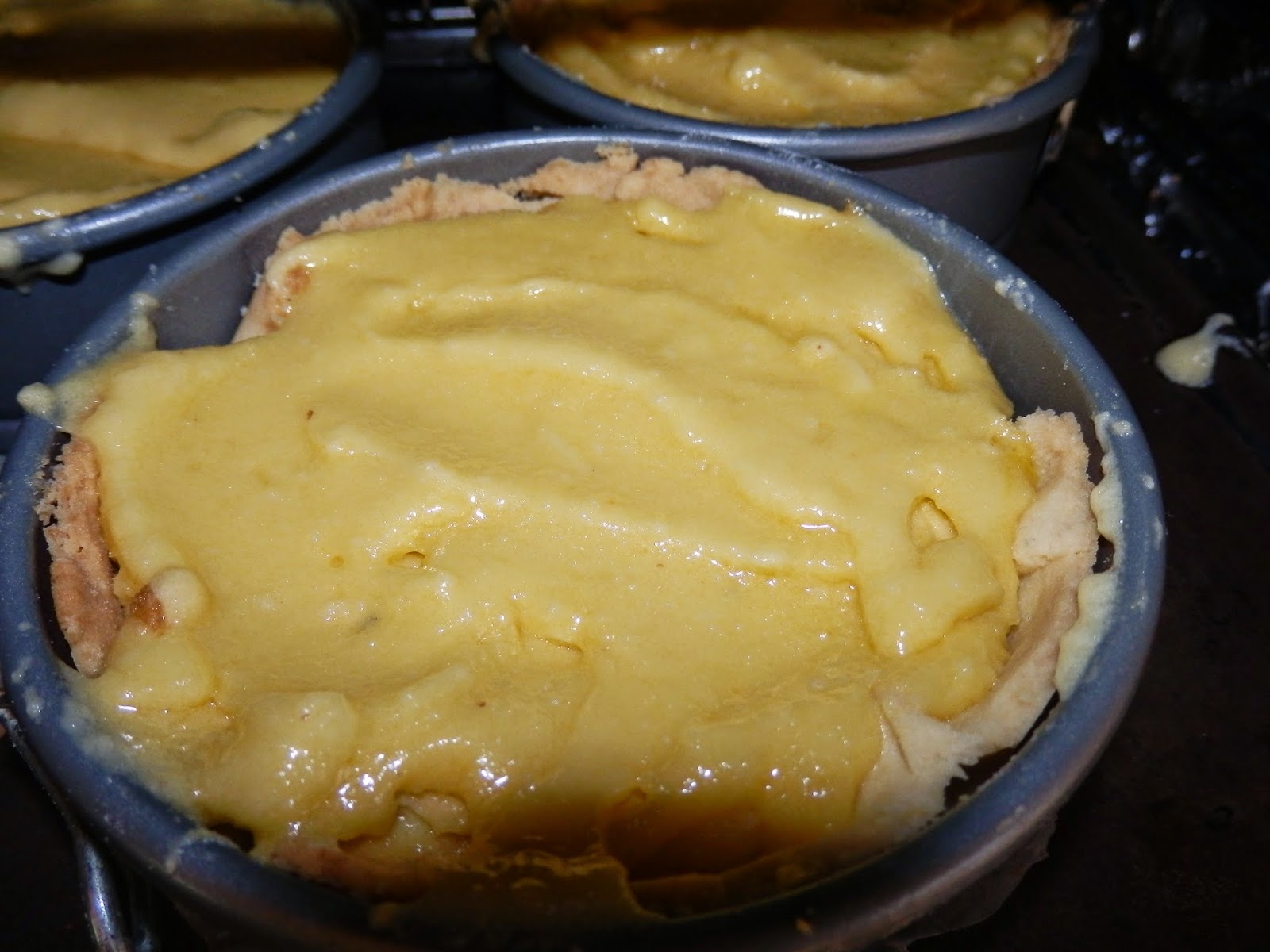
Spoon the Frangipane mixture on top and smooth with a wet knife. Be careful as the frangipane mixture may lift the fruit.


Bake at 190°C for 40-50 minutes.


Tuesday, 19 August 2014

A Colour of Mourning

My Grandfather passed away two weeks ago and as the news was published in the newspaper and Facebook, the sympathy cards and flowers slowly started arriving.
Each and every one was beautiful from close friends and family, and family we had never heard of on the other side of the country. What intrigued me most though was that each bouquet of flowers (including the potted rose bush) comprised of white flowers, not a medley of cheerful coloured ones, just white.

I'm not complaining.
In fact I'm strangely pleased.
I mean, I know Black is the official colour of mourning (still) and black flowers are virtually impossible to get. And white is the next neutral, black-related colour that is most easily available in flowers.

But though lesser known, White is also a colour for mourning, and has been for a long time.

White was used for children and unmarried women (virgins?), a symbol of their unblemished reputation and social virtue. It's not in the slightest bit relevant to my grandfather, and I doubt he would have appreciated this lesser known historical tradition. But still...
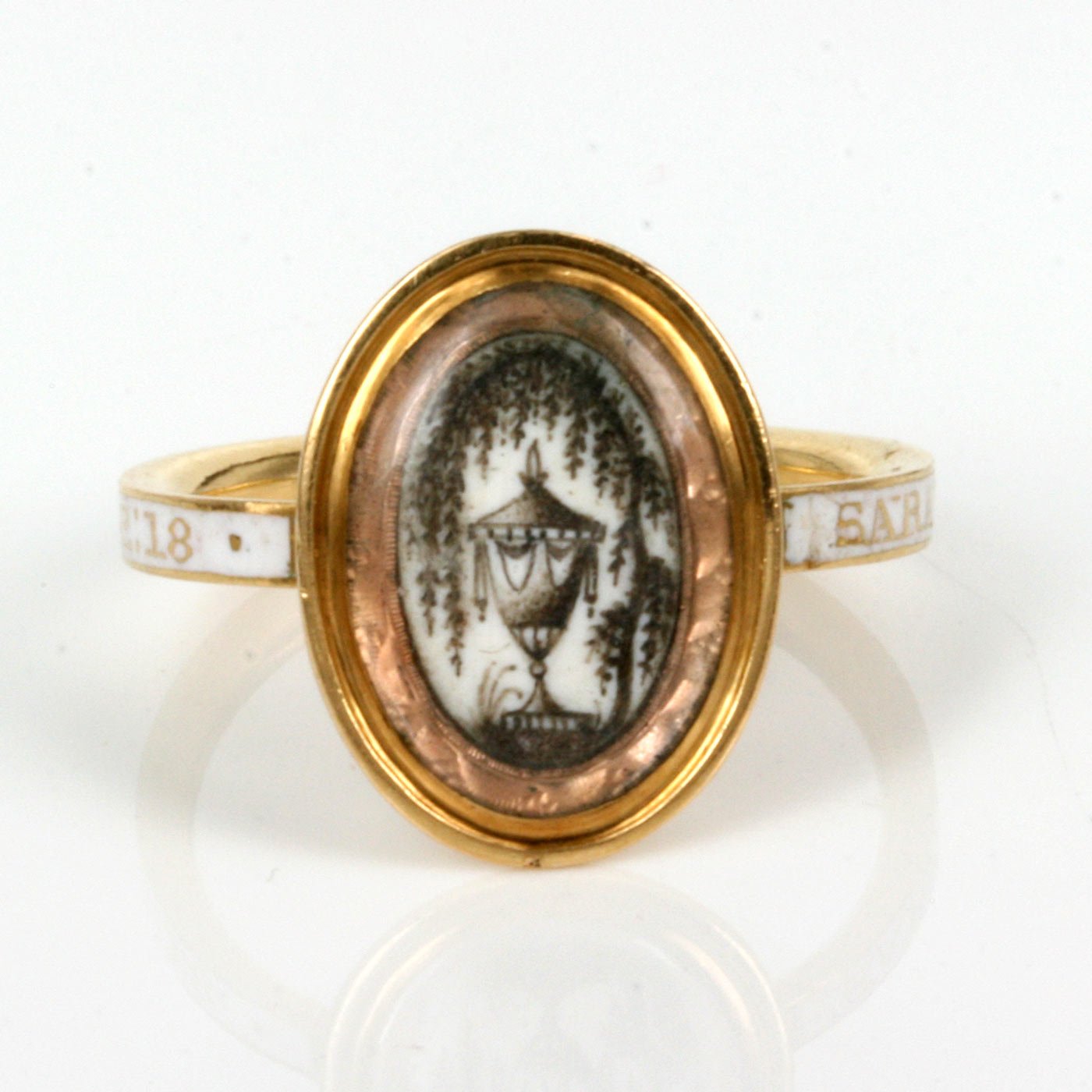
As illustrated through the rings below, the iconography remained the same, but the colour of the enamel differed. Both rings date to the 1780s. As an aside, the illustrations under glass on each ring were likely draw using the hair of the deceased.


Historically, white has also been the colour of deepest mourning among Medieval European Queens. Louise of Lorraine, wife of Henri III of France wore white after the assassination of her husband, and became known as Reine Blanche (The White Queen).


Louise's sister-in-law Mary Queen of Scots is pictured above dressed in the white mourning expected of a French Queen. She had been Queen of France for 17 months and was mourning the death of her husband Francis II, in addition to her father-in-law Henri II and her mother Mary of Guise.
This custom in France influenced the Queen Mother's wardrobe several centuries later when she made a State visit to France whilst still mourning the death of her mother.
It was a tradition at the Spanish courts until the end of the fifteenth century.
Juliana of the Netherland's daughters wore white to their mother's funeral.

Though the flowers were not ordered with me in mind, I appreciate the historical elements they unintentionally depict.


Tuesday, 12 August 2014

Easter treat (Bombolotti)

I'm in the process of scanning in old recipes, ones found carefully folded and sealed in plastic in a drawer of my grandfather's kitchen. Some recipes look illegible, some are illegible, being in Italian, one even is just a list of ingredients without a method.  However in amongst the pages are a few recipes that are recognisable, one of which stirs up memories of Easter.

In bygone years, Easter was a major family affair. Mum's extended family gathered for a long lunch while the kids played four square around the hills hoist. The main meal was okay; a vegetarian feast of falafels, fish, ful and a bevy of salads. We picked at it, primarily because we knew what dessert was.

Bombolotti!


Bombolotti are a little hard to describe. They're possibly a little like hollow doughnut balls, but more like the Greek Loukoumades, deep fried hollow balls of pastry, drenched in syrup, icing sugar and cinnamon.

I've watched Uncle Tony make them at least once, before trying them myself to resounding success. It's a strange recipe, a very very yeasty batter that subsequently smells horrendous. To create the balls, you grab the gloopy batter by the fistful, squeezing to create a balloon between the thumb and forefinger that is then dropped into the boiling oil.

To eat, you enjoy them by the bowlful, drowned in a light sugar syrup with a sprinkle of icing sugar and cinnamon.

Recipe 
1 lb Plain Flour
1 oz Fresh Yeast
1 tsp Sugar
[Warm Water]
[Frying Oil]

[To Serve:]
[Sugar syrup]
[Icing sugar]
[Cinnamon]

Mix well yeast [and sugar]  with a bit of warm water. 
Then add water and flour. The consistency not too liquidy (custard)
Mix the lot very well until it bubbles
Cover Overnight
Next day, beat very well the mixture by hand until it bubbles again
Deep Fry [They will puff up like a balloon. Cook until golden brown then remove from the oil, let stand on a paper towel before placing in the serving bowl.]
[Serve with a light sugar syrup, icing sugar and cinnamon]. 


Sunday, 10 August 2014

20 Minutes Out (Whistlepipe Gully)

Family friends are disappearing off to Germany for a sabbatical and so last weekend they dragged us on a bushwalk to Whistlepipe gully. Located this side of the hills, barely 20 minutes out of Perth, Mundy Regional Park/Whistlepipe Gully with the requisite water course for J (the 9 year old), rocks to ramble over for those who eschew the beaten track, and native flowers for the photographers.

Despite the reaction of the garden to this beautiful weather, we naturally assumed that the native flowers would not yet be out. So imagine our delight to be able to point out a collection to rival those in Mum's back yard.
Thankful that I had brought my camera, I quickly trailed behind the others (including J who was in search of water and a lunch spot), but was glad to catch the quirkiness of the native flowers in the sunshine.


Crawling up an embankment to photograph a pseudo Scottish thistle (this one not a Dryandra I'm told)...


... and the view back down the valley...


I stumbled upon an outcrop of Donkey Orchids which I think sent a cry of delight though our group and directed our eyes towards finding more for the duration of the day. 


While this spot had the water J was after, it  was scarcely two minutes from the car, and so did not qualify as a suitable lunch spot. 

Following the gully upstream we often had the roar of a waterfall or gurgle of the stream, or on one particular occasion the joy of being five billy goats gruff tramping over the bridge of a J troll ready to hurl mud pies at each and every one of us. 


Wandering off the beaten track and away from the onslaught of waves of dogs, we discovered more wonders, many of which I was visually familiar with, even if I had no clue as to the plant's name or family.
Often, the raw and striking beauty and sharp colour, a flash in an otherwise dusky landscape, were enough to catch my interest.

Something that almost looks like an edelwiess orchid with every petal covered in a downy white fur.


Something cool and alien-like

More donkey orchids though these looked bigger and slightly different from the ones we had encountered earlier.

A kangaroo paw (or relative) illuminated in the sunlight.


A colour combination I always refer to as Eggs & Bacon, but possibly a different plant. 

A Hovea (known simply because Mum kept pointing it out)

Something delicate


As is typical of the Australian bush, there were fallen trees and branches throughout the scrub, some big, some small, some beautifully decorated by nature, the presence of termites being the only thing keeping us from contemplating carrying it home.


In other places the scars of an old forest fire still remained. 

A sea of green and gold the spiky wattle carpeting a small corner of the valley.


A miniature world on the side of logs, along the length of cracks, or dipping down the side of granite boulders.


Looking down onto the Perth plain with the city in the distance.

I forget we have such beautiful places on out doorstep. 

Related Posts Plugin for WordPress, Blogger...